
Bathroom Mirror Ideas: Creative Uses of Mirrors in Bath Design
Looking for bathroom mirror ideas that make a real difference? You’re in the right place. Mirrors are more than a place to check your hair—they shape light, create depth, and set the mood. When used well, bathroom mirrors can make a tight room feel open and calm. They can also hide storage, frame a vanity, or turn a blank wall into a statement. In this guide, we’ll explore bathroom mirror trends, decorative mirrors, and creative mirror placement that work in both small and large baths. For design support that’s personal and practical, consider Envia Design as your renovation partner.
Table of Contents
- A Short History of Bathroom Mirrors
- What’s Hot Now: Bathroom Mirror Trends and Creative Mirror Placement
- Design Challenges and Smart Fixes
- enviadesign Step-by-Step: Choosing and Installing the Right Mirror
- Comparisons: Framed vs. Frameless, Backlit vs. Front-lit
- Future Prospects: The Next Wave of Bathroom Mirror Trends
- Company Highlight
- Interesting FAQ
- Conclusion
A Short History of Bathroom Mirrors
Mirrors in bathrooms started as simple, functional glass above the sink. Early designs were small, framed, and often fixed to medicine cabinets for hidden storage. Over time, bathroom mirrors took on more style influence, with wider frames, beveling, and decorative finishes. As lighting improved, designers explored mirror size and placement to spread light farther. Today, homeowners look to bathroom mirror ideas to solve layout challenges and boost wellness. The shift from “just a mirror” to a versatile design tool set the stage for modern bathroom mirror trends.
What’s Hot Now: Bathroom Mirror Trends and Creative Mirror Placement
Backlit and Integrated Lighting
Backlit mirrors remain a top trend because they reduce harsh shadows and make tasks easier. A backlit panel throws a halo of light around the mirror, which helps small baths feel deeper. Look for LEDs with 3000K–3500K color temperature for warm, flattering light and CRI 90+ for true color. Many new decorative mirrors include dimming and defogging, great for steamy mornings. If you prefer sconces, place them at eye level on both sides to reduce glare. This is a smart way to keep creative mirror placement balanced and user-friendly.
Organic Shapes and Statement Frames
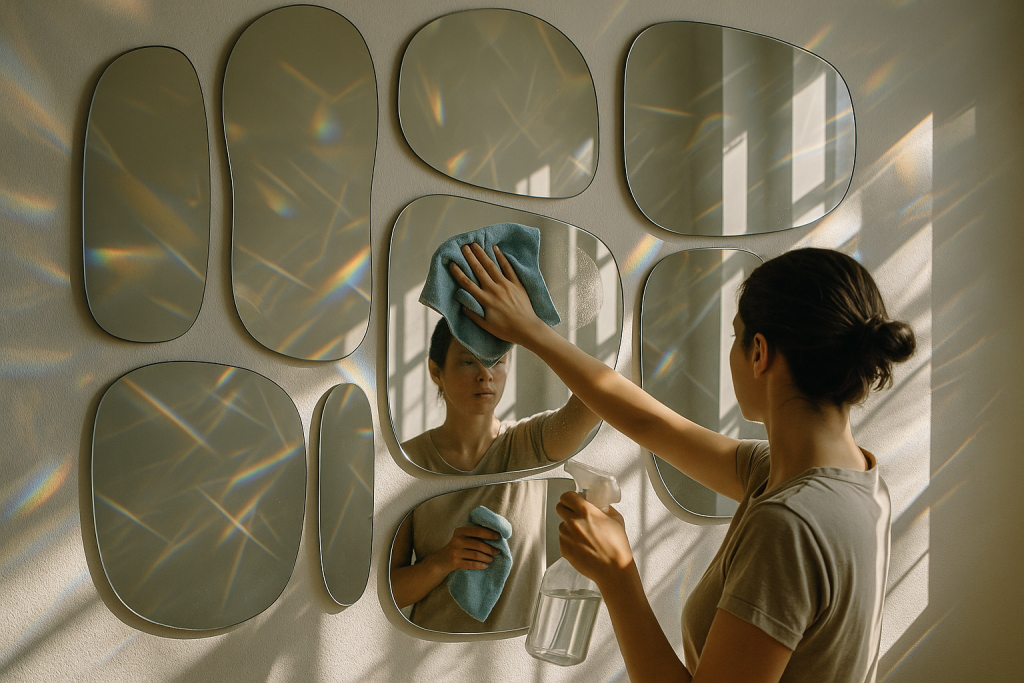
Rounded rectangles, arches, and soft ovals soften the straight lines of tile and cabinetry. These shapes feel calm and spa-like, a big reason they lead current bathroom mirror trends. Statement frames in matte black, aged brass, or natural wood turn bathroom mirrors into art. For a modern twist, try super-thin metal frames or a clean, frameless edge. Larger mirrors over double vanities keep the look cohesive and make rooms feel taller. When in doubt, let decorative mirrors echo your faucet finish for a polished look.
Creative Mirror Placement for Light and Space
Placing a mirror opposite a window doubles the daylight and brightens every corner. In narrow rooms, a full-height panel on one wall can visually widen the space. Over a freestanding tub, a shaped mirror adds drama and bounces candlelight at night. In small powder rooms, a wall-to-wall mirror can feel like a magic trick, making the room read twice as big. Consider mirrored medicine cabinets to blend storage with style. Used thoughtfully, creative mirror placement can transform a basic bath into a showpiece.
Design Challenges and Smart Fixes
Bathrooms are tough on materials—think steam, splashes, and daily use. Choose 1/4-inch (6 mm) mirror glass to resist warping, and seal edges to prevent black “creep.” For humid climates, a heated demister pad keeps the surface clear after showers. Mounting can be tricky on tile; use proper anchors and avoid grout lines where possible. Electrical planning matters, especially for backlit mirrors and integrated controls. If the vanity is off-center to a wall, consider two small mirrors rather than one big piece to keep sight lines even. Measure lighting, plumbing, and outlet locations early to prevent costly do-overs.
enviadesign Step-by-Step: Choosing and Installing the Right Mirror
Picking the right mirror is simple when you break it down. Start with size: aim for the mirror width to be about the same as the vanity or a few inches smaller. Next, choose the type—framed, frameless, or cabinet—based on storage needs and style. Decide on lighting: backlit, edge-lit, or sconces; test light color if possible. Plan mounting height so the mirror’s center meets the average user’s eye level (usually 60–64 inches from the floor). Confirm wall conditions and blocking, especially for heavy pieces and stone walls. Finally, hire a pro for electrical connections and to ensure safe, level installation.
- Size to vanity: balanced width and proportional height.
- Glass: 1/4-inch thickness; safety mirror or tempered near tubs and showers.
- Lighting: CRI 90+, 3000K–3500K for flattering tone.
- Demisting: add a heated pad for family baths with daily steam.
- Mounting: use rated anchors; seal edges where splashes happen.
Comparisons: Framed vs. Frameless, Backlit vs. Front-lit
Framed mirrors add warmth and texture; they suit traditional and transitional spaces. Frameless mirrors feel sleek and expand the room visually; they’re easy to clean and pair well with minimal hardware. Backlit mirrors glow from behind, softening shadows and reducing glare for makeup and shaving. Front-lit setups (sconces or light bars) provide strong facial lighting but can cast shadows if placed too high. Medicine cabinets offer hidden storage; flat panels keep a cleaner silhouette. If you crave both form and function, a shallow mirrored cabinet with integrated lights is a winning middle ground.
Future Prospects: The Next Wave of Bathroom Mirror Trends
Smart mirrors with voice control, touch dimming, and weather widgets are moving from luxury to mainstream. Expect thinner LED panels with better color accuracy and lower energy use. Sustainable choices are rising too, like low-lead glass and recycled frames. In the near future, augmented overlays may guide skincare routines or show lighting presets. We’ll also see more anti-fog tech and built-in magnification for task zones. As wellness design grows, bathroom mirror ideas will focus on calm light, clean lines, and easy daily rituals.
Company Highlight
Our studio partners with trusted trades to deliver results that feel great and last. With years of insulation experience in the renovation sphere, our team uses cutting-edge techniques and tools to help homeowners and businesses save energy, boost comfort, and protect their properties. Services can be delivered remotely or on-site, with flexible options to meet client needs. This whole-home view matters because mirrors, lighting, ventilation, and insulation all work together. We plan details early, coordinate with electricians, and verify product specs before anything is ordered. That coordination keeps timelines smooth and minimizes surprises on install day.
Interesting FAQ
Mirrors in bathrooms amplify space and light, becoming design features beyond functionality.
How big should a bathroom mirror be compared to the vanity?
As a rule, match the vanity width or go a few inches narrower on each side. This keeps proportions calm and intentional. For double vanities, one large mirror can feel modern, while two mirrors add symmetry. If ceilings are low, go taller to draw the eye up. In powder rooms, wall-to-wall mirrors can visually double the room. This sizing approach supports creative mirror placement and current bathroom mirror trends.
What mirror glass and coating should I choose?
Pick 1/4-inch glass for better flatness and durability. Look for copper-free, low-iron options if you want brighter, truer color. Edge sealing helps prevent moisture damage over sinks and near showers. Heated demisters keep the surface clear after hot showers. These choices help decorative mirrors stay beautiful longer. Quality glass and proper sealing are small upgrades with big payoffs.
Are backlit mirrors bright enough on their own?
Many are, but it depends on the lumen output and your wall color. For everyday tasks, pair a backlit mirror with sconces or overhead lighting to remove shadows. Choose CRI 90+ LEDs for accurate skin tones. Dimmable drivers let you shift from task to spa mode. If you wear makeup daily, add front lighting at eye level. This layered approach keeps bathroom mirrors functional and flattering.
How do I clean and care for mirrors?
Use a soft cloth and alcohol-free glass cleaner, wiping edge to edge. Avoid ammonia near mirror edges to prevent blackening over time. Keep ventilation on during and after showers to reduce condensation. Check mounting clips and seals once a year. For hard water spots, use diluted vinegar, then rinse and dry. Regular care keeps decorative mirrors crisp and clear.
Conclusion
From space-stretching panels to sculptural decorative mirrors, today’s bathroom mirror ideas blend beauty with real-life function. By sizing to your vanity, planning lighting, and using smart features like demisters, you can upgrade comfort in a single weekend. Keep an eye on bathroom mirror trends like soft organic shapes, integrated lighting, and sustainable materials. With thoughtful choices and creative mirror placement, even a small bath can feel bright and serene. The right mirror doesn’t just reflect your room—it elevates it.