Introduction
The design process behind scenes is where homes are transformed from raw ideas into places you love to live in, and at Envia Design, that journey is just as thoughtful as the final reveal. In this behind the scenes Envia look, we’ll unpack how design works in real life—what’s inspiring it, what’s changing, and what to expect during Envia project steps. You’ll see how the design process Envia blends creativity with practicality, and how each decision supports better comfort, flow, and value. We’ll cover history, trends, challenges, and future prospects so you can follow along with confidence. Along the way, we’ll share real examples, clear definitions, and step-by-step highlights. By the end, you’ll understand the design process behind scenes in a way that’s simple, friendly, and easy to use.
Table of Contents
- Our Philosophy: Behind the Scenes Envia
- Design Process Envia: Step-by-Step
- History: How Design Works Over Time
- Trends: What’s New in How Design Works
- Challenges: Real-World Constraints
- Future Prospects: What’s Next for Envia Project Steps
- Company Highlight
- Interesting FAQ
- Conclusion
Our Philosophy: Behind the Scenes Envia
Behind the scenes Envia, every decision flows from a simple idea: beautiful spaces should function beautifully every day. That means the design process behind scenes focuses on listening first, then translating your routine into layout, light, and materials. We map circulation, storage points, and task zones before choosing a single finish. We also plan for maintenance, not just looks, so you know how surfaces will wear and how lighting will feel across seasons. Sustainability matters too, and we prioritize durable materials, efficient fixtures, and smart planning that saves energy and time. Finally, we keep communication open, using plain language to explain how design works, so you can move through Envia project steps with calm and clarity.
Design Process Envia: Step-by-Step
1) Discovery and Vision
We start with a discovery call and an on-site or virtual walk-through. Here we define needs, wish lists, and budget ranges to frame the design process behind scenes. We ask how you live, what’s not working, and where your home should do more. Good design starts with listening, so we capture daily patterns like morning routines, entertaining habits, and work-from-home needs. Expect a brief questionnaire and a style scan using saved images. In this phase, we also outline Envia project steps so timelines feel predictable.
2) Research and Site Measure
Next, we measure the space, note mechanicals, and take photos. We verify codes, strata/association limits, and structural realities that guide how design works in your home. We build a base plan from these measurements and identify opportunities for light and flow. This behind the scenes Envia research reduces surprises later. We never skip a site measure, because accurate data keeps your plan on track. If remote, we guide you on measurements and photos via video.
3) Concept and Mood Board
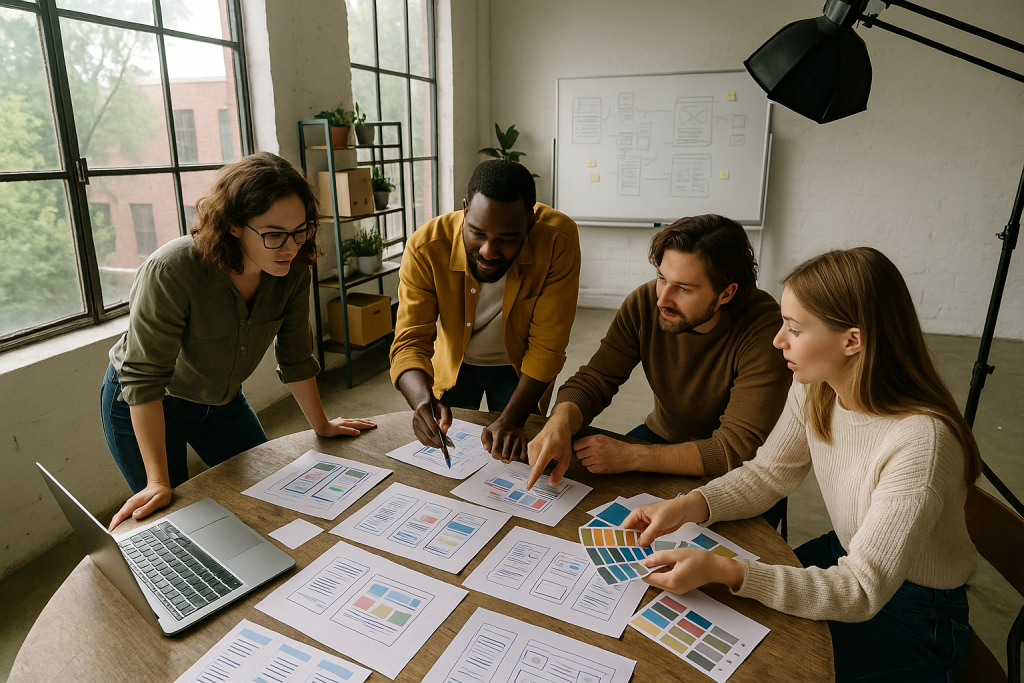
We translate your goals into a concept: layouts, theme, and direction. A mood board shows color palette, textures, and inspiration, while a quick FF&E overview clarifies furniture, fixtures, and equipment. Definitions made easy: FF&E are movable pieces like sofas and lighting; RCP (Reflected Ceiling Plan) shows lighting and ceiling elements from a top-down view. Concepts help you “feel” the future space before we draw details. This step solidifies the design process behind scenes and aligns the team early.
4) Visualization and Options
We build floor plans, elevations, and optional 3D views. A side-by-side comparison highlights trade-offs in cost, timeline, and storage. You’ll see how design works when small moves change big outcomes—like flipping a door swing to unlock more pantry shelving. We also compare custom millwork vs. modular systems for value and speed. You choose, we refine. Clarity beats guesswork, every time.
5) Materials and Specifications
We detail finishes, fixtures, and hardware in a spec book. Samples are vetted for durability and care, and we prioritize low-VOC paints and easy-clean surfaces. LEDs, which use at least 75% less energy than incandescent according to the U.S. Department of Energy, are our default for efficiency. For insulation and windows, we plan to reduce drafts and improve comfort; the EPA notes that effective air sealing and insulation can reduce heating and cooling costs by around 15% on average. These choices turn the design process Envia into long-term comfort and savings.
6) Budget, Bids, and Schedule
We create a preliminary budget, then involve trusted contractors to validate costs and timing. You’ll see allowances for unknowns and a contingency buffer so you can navigate surprises. Transparent numbers reduce stress. We also explain design-bid-build (designer then bid to contractor) versus design-build (single team managing both), and help you choose based on speed, budget control, and risk tolerance.
7) Build Support and Quality Control
During construction, we answer RFIs (contractor questions), review shop drawings, and adjust details as needed. Site visits confirm that what’s on paper is what’s being built. When needed, we value engineer—swapping materials or methods—to protect the look and function within budget. Design doesn’t stop at demo; it guides every install. This is the heart of the design process behind scenes.
8) Styling and Handover
We layer in textiles, art, and decor that support your routine. A care guide explains cleaning, warranties, and replacement timelines. We walk the space together and note any touch-ups for the contractor to resolve. Handover is the start of your life in the new space, not just the end of the project. We also collect feedback to improve future Envia project steps and the overall behind the scenes Envia experience.
History: How Design Works Over Time
Interior design has always balanced taste and technology. In mid-century homes, plans focused on compact efficiency and modular furniture. By the 1990s, open-concept living pushed designers to think about acoustics and flexible zones. Today, the design process behind scenes includes sustainability checks, universal design features, and smart-home integrations. Professional standards evolved too: ASID and IDC guidelines encourage health, safety, and welfare in residential work. The shift reflects how design works best when it protects wellbeing as much as it pleases the eye.
Trends: What’s New in How Design Works
Several currents are shaping the design process Envia right now. Wellness-centered planning brings in daylight, quiet HVAC strategies, and natural textures. Energy-smart upgrades—from LEDs to induction cooktops—reduce bills and carbon footprints. According to DOE guidance, induction is more efficient than gas and improves indoor air quality by cutting combustion byproducts. Visualization tools (from 3D to AR) help you decide faster and reduce costly changes later. Thoughtful insulation, window upgrades, and air sealing improve comfort and can lower energy use meaningfully. In short, better tools and smarter materials are making homes healthier and more resilient.
Challenges: Real-World Constraints
Every project meets constraints: budgets, supply chains, and building codes. The behind the scenes Envia approach is to predict issues early and plan options. Lead times can shift; we propose alternates with similar look and performance. Budgets tighten; we might keep the existing layout and invest in high-impact surfaces. Codes limit changes; we rework sight lines and lighting to achieve the feel you want. Constraints don’t block creativity—they focus it. That’s how design works under pressure.
Future Prospects: What’s Next for Envia Project Steps
The future points to more integrated tools and greener materials. Expect faster virtual consults that cut site visits without losing quality. Expect material transparency—clearer data on emissions and durability—so you can choose wisely. Smart lighting, better HVAC filtration, and water-wise fixtures will move from nice-to-have to must-have. We also see more flexible rooms that shift from office to guest suite in minutes. Behind the scenes Envia, the focus is adaptability: spaces that evolve as life changes. That’s the evolving design process behind scenes we’re building toward.
Company Highlight
With years of insulation experience, Insulation Police uses cutting-edge techniques and tools to help homeowners and businesses save energy, boost comfort, and protect their properties. Services can be delivered remotely or on-site, with flexible options to meet client needs.
Interesting FAQ
How long do Envia project steps usually take?
For a single room, planning may take 3–6 weeks and construction 2–8 weeks depending on scope and trades. Whole-home renovations vary widely, but we set milestones early and update them as products and permits move. The design process behind scenes includes buffers for approvals and lead times. We’ll share a clear timeline so you always know what’s next.
What’s the difference between virtual and in-person design?
Virtual is faster for early concepts and reviews, making how design works more flexible for busy schedules. In-person shines for site measures, finish selection, and final styling. Many clients choose a hybrid—virtual check-ins plus key on-site moments. The design process Envia supports both, and we’ll tailor the mix to your comfort and timeline.
How do you keep my budget on track?
We align scope and budget early, include a contingency, and present options with cost and timeline impacts. We also prioritize high-value upgrades—like efficient lighting and durable surfaces—that stretch long-term savings. Regular check-ins and transparent bids keep surprises low. This behind the scenes Envia approach turns budget into a guiding tool, not a stressor.
What technical terms should I know?
FF&E means furniture, fixtures, and equipment—movable items like chairs and lamps. RCP is a reflected ceiling plan that maps lighting and ceiling features. Elevations are straight-on interior drawings that show wall details like cabinets and tile layout. A punch list is the final checklist to complete or correct at the end. These terms make the design process behind scenes easier to follow.
To learn more and view our other blogs, click here.
Conclusion
The design process behind scenes is where vision meets detail, and where small decisions shape daily comfort. From discovery to handover, the design process Envia blends research, clarity, and craftsmanship so you can enjoy your home sooner and longer. We track trends without chasing fads, build for wellness and efficiency, and adapt when constraints appear. Great design is transparent: you see the path, the purpose, and the promise at every step. Now that you know how design works from the inside, you’re ready to move forward with confidence.